
Pythons
Ball pythons possess an extraordinary diversity of inherited colour and pattern variants. Many of these “morphs” are maintained through carefully documented breeding pedigrees, making it possible to connect visually distinctive phenotypes with their underlying genetic causes. In effect, these variants provide a large collection of naturally occurring genetic perturbations through which we can study vertebrate pigmentation.
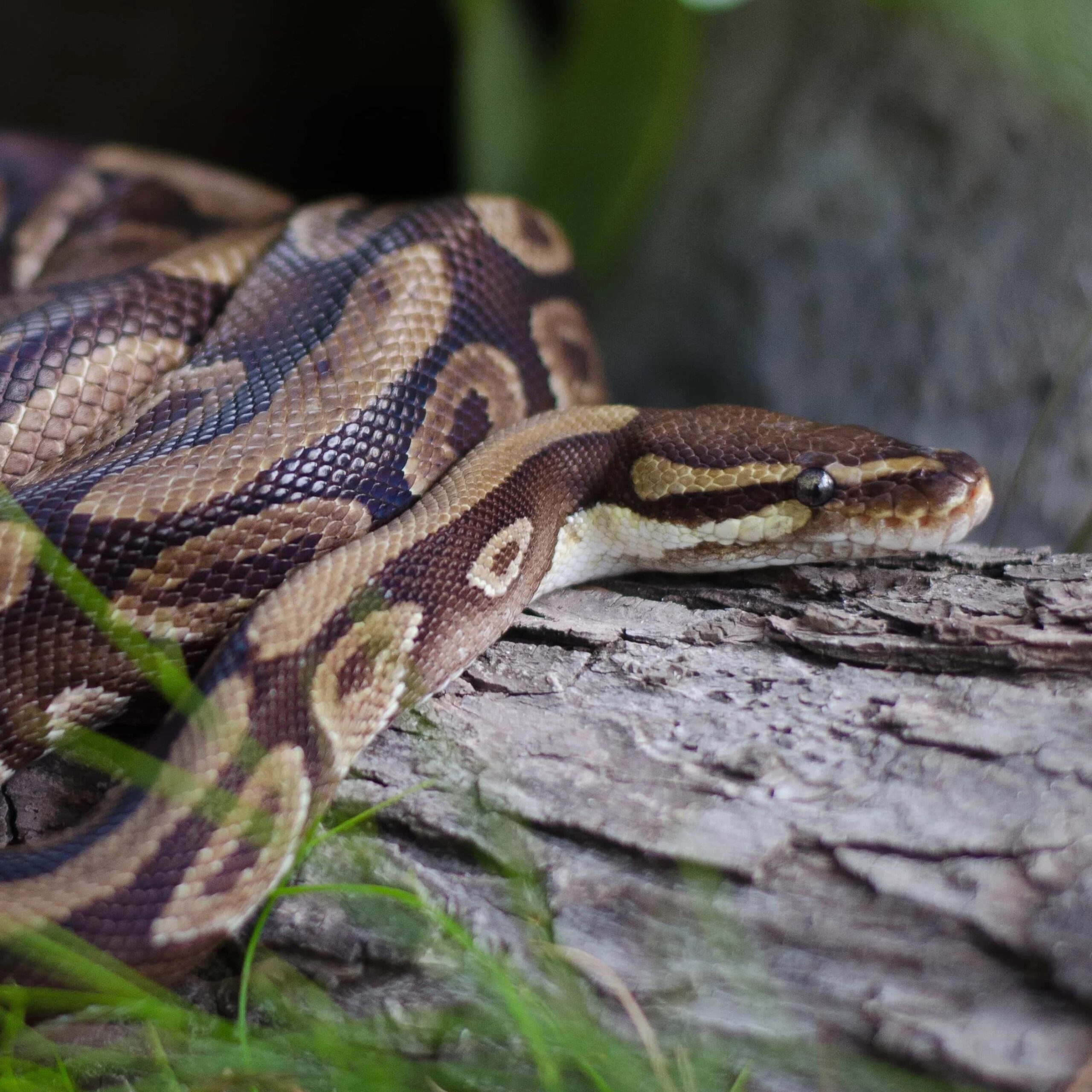
Why pythons are a good system for our questions
We combine population-genetic mapping, genome sequencing, microscopy, and functional experiments to identify the mutations responsible for particular morphs and determine how they affect pigment-cell development. This work has implicated genes and pathways including tfec, MC1R, and GTP cyclohydrolase in ball-python colour variation, sometimes revealing functions that were previously poorly understood in reptiles or vertebrates more generally.
Pythons therefore provide more than an opportunity to explain striking colour patterns. They allow us to investigate how mutations alter developmental pathways, how comparable phenotypes can arise through different molecular mechanisms, and which elements of pigmentation biology are conserved across vertebrates.
Members Involved

Alan Garcia-Elfring
Graduate Student

Rowan Barrett
Principal Investigator