Outreach
The scientific community has a responsibility to communicate the importance of primary research to the public; unfortunately this is not always done effectively. As a result, we often fight an uphill battle against misconceptions and ignorance about basic scientific issues that we study. It is incumbent on scientists to make an effort to educate the public through outreach programs about the importance of our research for addressing basic and applied problems in science and society. To this end, we have made efforts to develop relationships with the communities where we conduct our fieldwork, and to contribute to science education through participation and organization of groups involved in public outreach. Below you can read about some of the fun initiatives Barrett lab members are engaged in.
I am the Redpath Museum’s graduate student Public Programs representative, where I strive to make the museum space a place where graduate student research is actively celebrated, and science accessible to visitors of all ages and backgrounds. Through this role, I am leading the curation of the Student research at the Museum exhibit, where each month we highlight a different student’s research and their trajectory in STEM, and begin to humanize science in the process. In particular, we are highlighting the voices of under-represented groups within STEM, as many people visiting museums feel that their stories and that of their communities are rarely showcased. This exhibit began as a physical installation in the second floor gallery, which has since transitioned online because of the COVID-19 pandemic. This work is done in close collaboration with the museum’s Public Programming administrative coordinator, Ms. Marie-Eve Leclerc. Current and past online exhibits can be accessed here.
I also enjoy giving talks to the general public about my research via the Museum. The Faculty of Science provides training on inquiry-driven outreach, where the goal is to co-construct knowledge with those in attendance, instead of assuming your audience is a “blank slate.” As such, my talks are very interactive, with constant questions from and to those tuned in, and visuals that the audience and I explore together. This process not only increases engagement, but also validates participants’ insights, subverting the science-public divide where scientists are positioned as the sole bearers of knowledge. One of my most memorable talks was my most recent one as part of the Québec-wide 24 heures de science festival and McGill’s 200th anniversary Family Science Day celebrations; you can read more about the outreach events that day in the following McGill Tribune article. Besides sharing with the general public the importance of coral reefs, what was most rewarding was hearing the impact my presentation had on the children in attendance. One of the children who came to my 24 heures de science talk drew me later that day during STEMM Diversity at McGill’s “draw a scientist” activity. Being able to share with younger generations that science takes many forms and that it is not a one-size-fits-all in terms of who can be a scientist, is why doing outreach is an integral part of my graduate studies at McGill.
-Victoria Marie Glynn
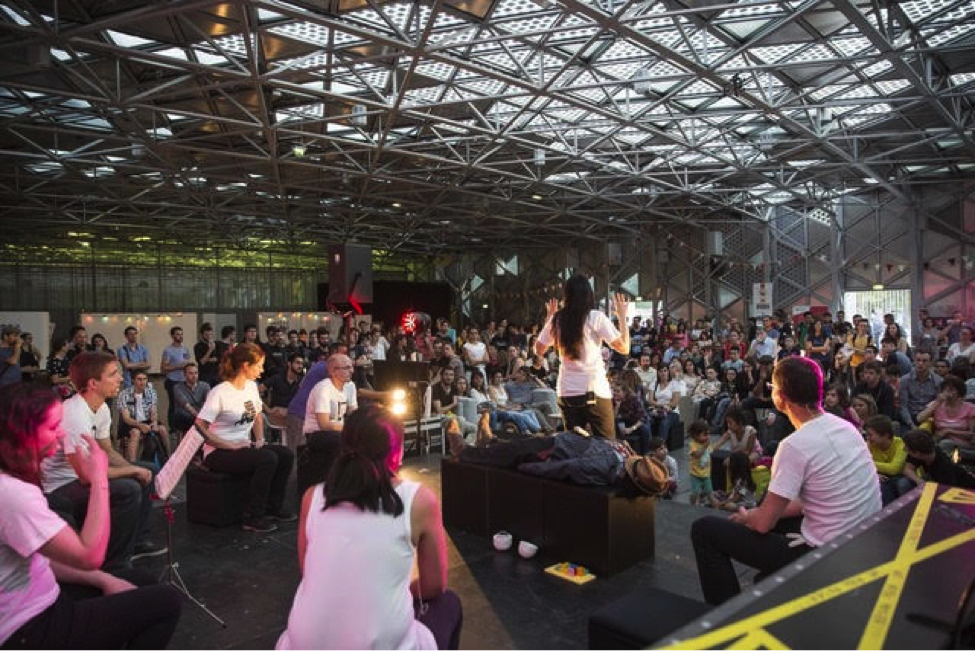
More than 10 scientists presented their work with art, theatre, animation and more at Ramène ta Science! Our lab participated in the My Thesis in 180 Seconds challenge to present our current work in speciation of Darwin’s finches and the importance of collaborative work in science. More specifically, we explained how new organisms can be created through the process of natural selection and how biodiversity is immensely important for ecosystem functioning and human populations. We were pleased to participate in a project making a direct connection between scientists and the public.
You can watch the video of the event here (in French):
https://www.facebook.com/ccstilarotonde.emse/videos/798827760282514/.
Link:
https://www.echosciences-loire.fr/articles/ma-science-en-180-secondes-par-marc-olivier.
I am also helping to develop the exhibit promoting diversity in STEM at the Redpath Museum. -Marc-Olivier Beausoleil
The importance of how science and scientists are perceived by the general public cannot be overstated. We often think of outreach as an extra thing on top of our research that – while is good to do, is ultimately somewhat optional. This paradigm needs to change. Science is a public endeavor supported by mostly public funds. We need justify our work and make it apparent that it is worth investing in for the good of everyone, especially in today’s political climate.
On April 20, 2017, I gave a public science talk to the Montreal Field Naturalists Club on how molecular genetics is revolutionizing the way we do conservation. I talked about how biologists use DNA from giant panda feces to estimate the number of wild pandas, which is partly the reason why they are no longer listed as an endangered species. I also talked about how environmental DNA of fish from feces, slime, etc. floating in lakes and rivers are being used to track invasive species of Asian Carp in the Mississippi River. Lastly, I talked about my research on using DNA from the bloodmeal of leeches to survey mammalian biodiversity in the Annamite forests of Vietnam and Laos.
https://montrealfieldnaturalists.wordpress.com/
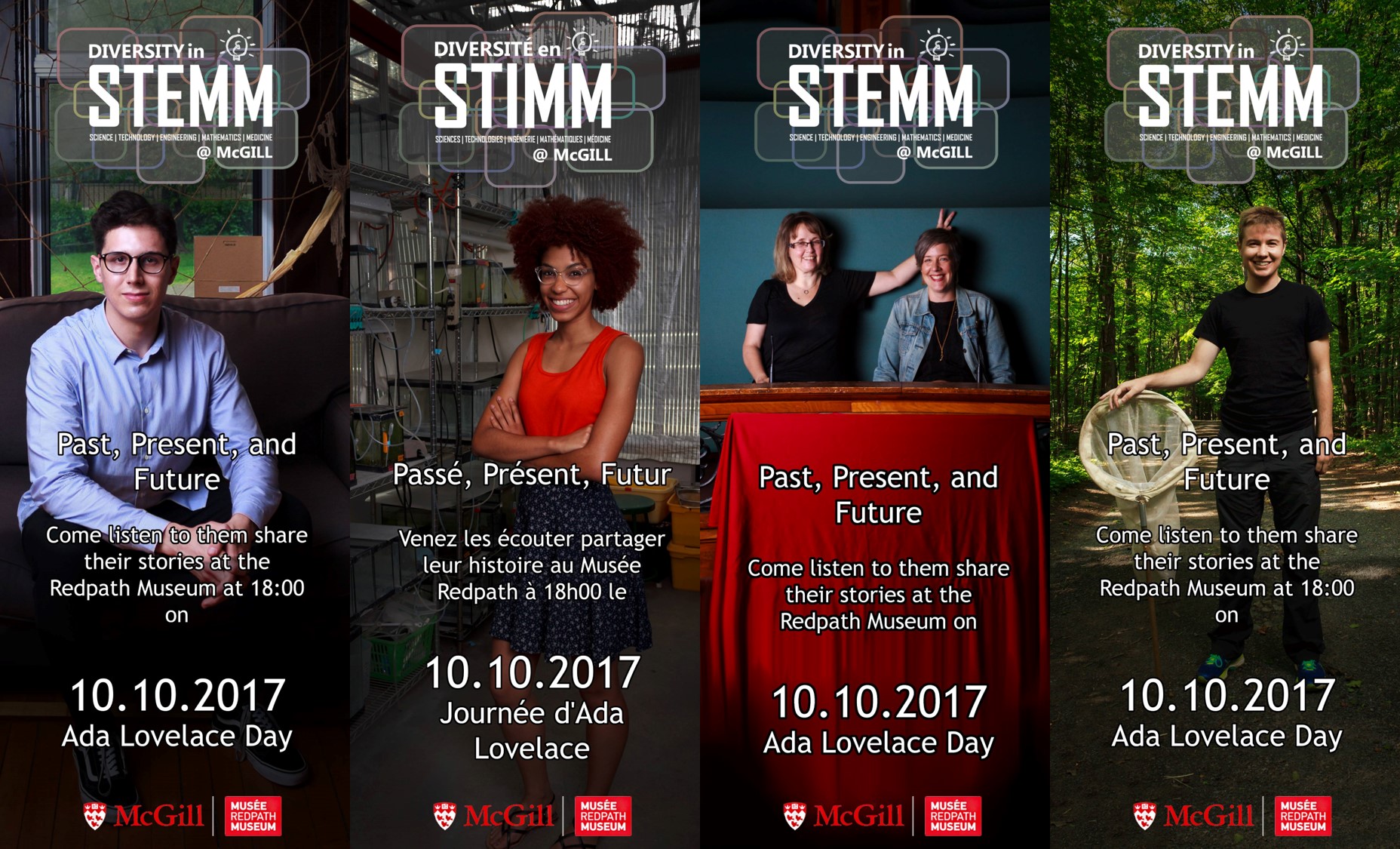
I am also the founder of STEMM Diversity @ McGill, a student-drive initiative at the Redpath Museum to promote diversity in Science, Technology, Engineering, Math and Medicine. The initiative exists primarily as an online exhibit and a colouring/activity book. The online exhibit centers around interviews of diverse students and faculty about their personal experiences and opinions relating to the roles of gender and ethnicity in STEMM. These interviews were conducted by students and staff at the Redpath Museum in collaboration with TVM: Student Television at McGill. The exhibit also features various articles about diversity issues in STEMM as well as other student groups at McGill working towards greater diversity in STEMM. The exhibit is available at www.stemmdiversity.com/ and is now being used on 2 touchscreens in the second floor gallery of the Redpath Museum.
The STEMM Diversity @ McGill Colouring and Activity Book has received great reviews wherever we have sent it. The colouring book’s reach has expanded throughout and past the McGill community and continues to grow. To date, 275 colouring books have been distributed to elementary schools in Quebec and Ontario. Over 400 were distributed to eager participants of the NSERC Gender Summit 11. The colouring books have also been distributed to after school programs such as McGill’s Student-Parent Lunch and Learn, Homework Zone, which is an after-school program for underprivileged schools, Community and Family day, which was organized as part of McGill’s Black History Month, the Beaconsfield library, which does ample community engagement, and the entire Norfolk County library system in southern Ontario. 100 copies have gone to McGill’s series of Mini-Science lectures, and there are plans to send copies to Women in Resource Development Corporation’s STEM for GIRLS series. While colouring books are free to these educational institutions thanks to funds we have raised, the colouring books are also for sale in the Redpath Museum gift shop. All proceeds from the colouring book at the Redpath Museum go towards the museum’s outreach activities that encourage young people to pursue STEMM fields and their passions.
I also volunteer with “Lets Talk Science” (http://outreach.letstalkscience.ca/mcgill-university.html) to do science outreach to the general public. For example, we did an activity with visitors to the Redpath Museum where we blew carbon dioxide into red cabbage extract to simulate ocean acidification. -Charles Xu

I am currently involved in planning the Asokan Project, an initiative facilitated by Art History graduate student and member of Poundmaker Cree Nation Alexandra Nordstrom and myself in partnership with Chief Poundmaker School, which seeks to provide students from grades 5-9 of Chief Poundmaker School with summer programming focusing on the intersection between arts, culture, and science from an Indigenous perspective. We aim to engage students in collaborative learning that uses land as pedagogy for both scientific and artistic learning. Land as pedagogy is an ancient Cree concept that is linked with Indigenous identity and worldviews. This project is extremely important because it places an Indigenous worldview at the forefront of a collaborative learning process, creating a space for Indigenous youth to explore Cree culture and Indigenous ways of learning—an opportunity that is rarely offered in colonial and western institutions. Moreover, using art practice as a means to explore and communicate scientific learning brings together two disciplines that are generally thought of and taught as diametrically opposed in western schooling—arts and sciences. By bringing together arts and science, this project creates room for students to have sustainable and productive dialogues about how we can communicate environmental issues through art practice from an Indigenous point of view. Our project is aptly named the Asokan Project as “asokan” means bridge in Plains Cree and our main goal is to bridge gaps between arts and science, and Indigenous and western knowledge systems. We feel that it is necessary to bridge these gaps in order to be more productive and effective in any discipline and also to create welcoming spaces for everyone to participate in science. -Janay Fox
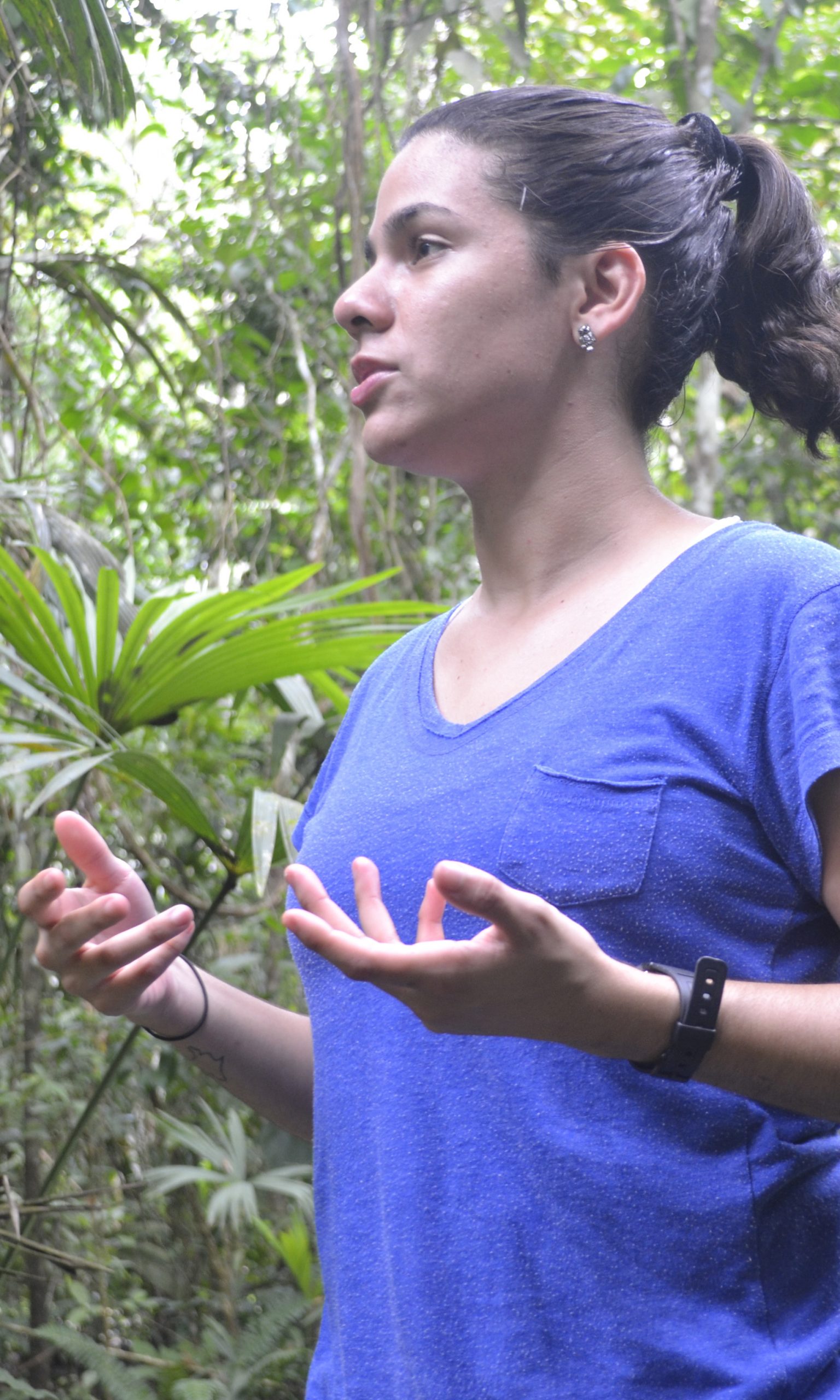
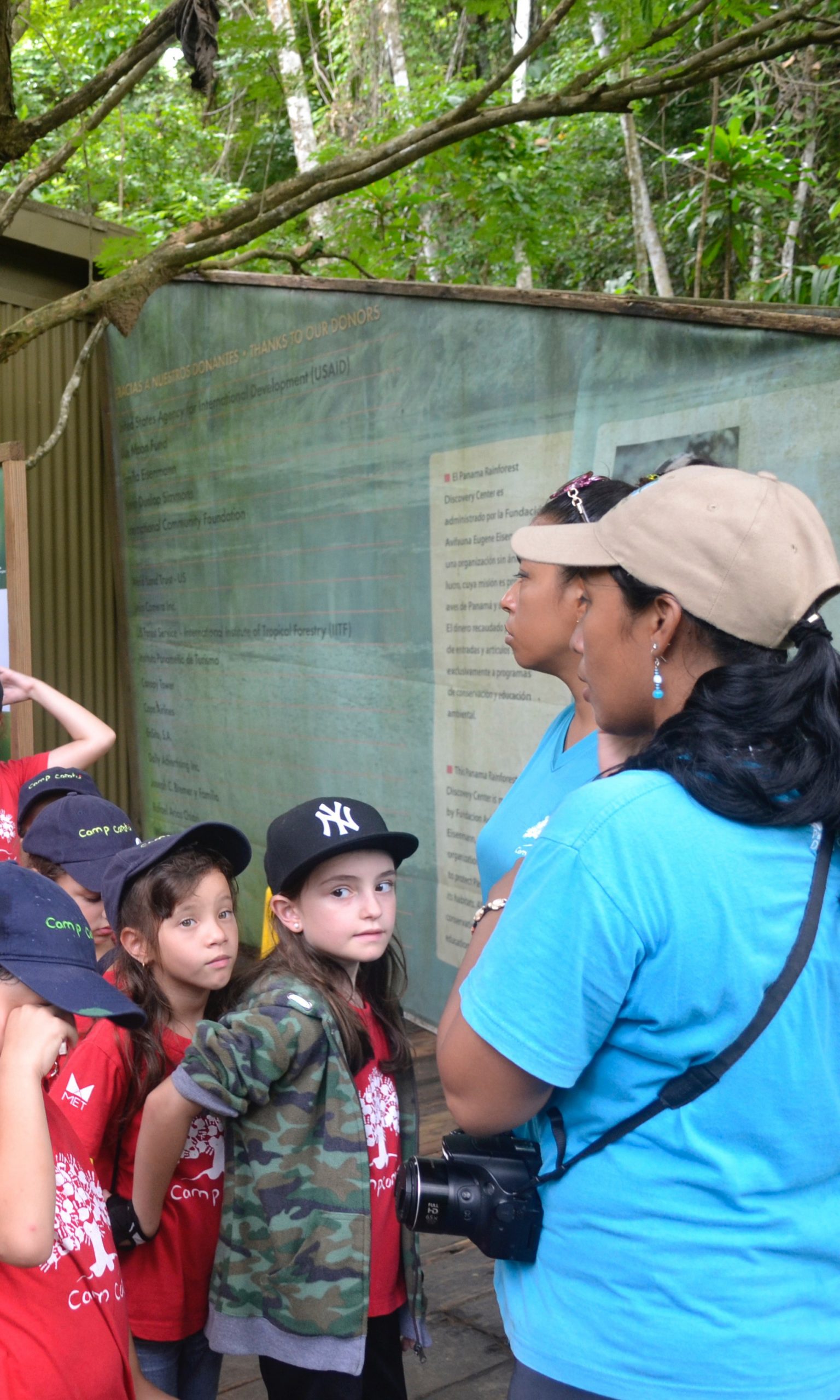
I had the great opportunity to work as an intern in the NGO Fundacíon Avifauna Eugene Eisenmann. The institution has as its main project the Panama Rainforest Discovery Center, an interactive nature center responsible for promoting Panamanian bird conservation, developing sustainable tourism and educational programs regarding sustainability, and working with the Panamanian community to administrate protected areas. During my internship I was involved in different sectors of the NGO, from administrative to daily maintenance tasks. One of the most satisfying moments was to take part in a project to raise emergence funds for the center, which is facing monetary difficulties and problems with floods and damaged trails. The center is a wonderful place to have an authentic experience of the lowland tropical rainforest and get in contact with environmental and conservation values. It worth knowing and contributing to the growth of this project. For more information: http://www.pipelineroad.org -Ananda Regina Pereira Martins