
Caribou
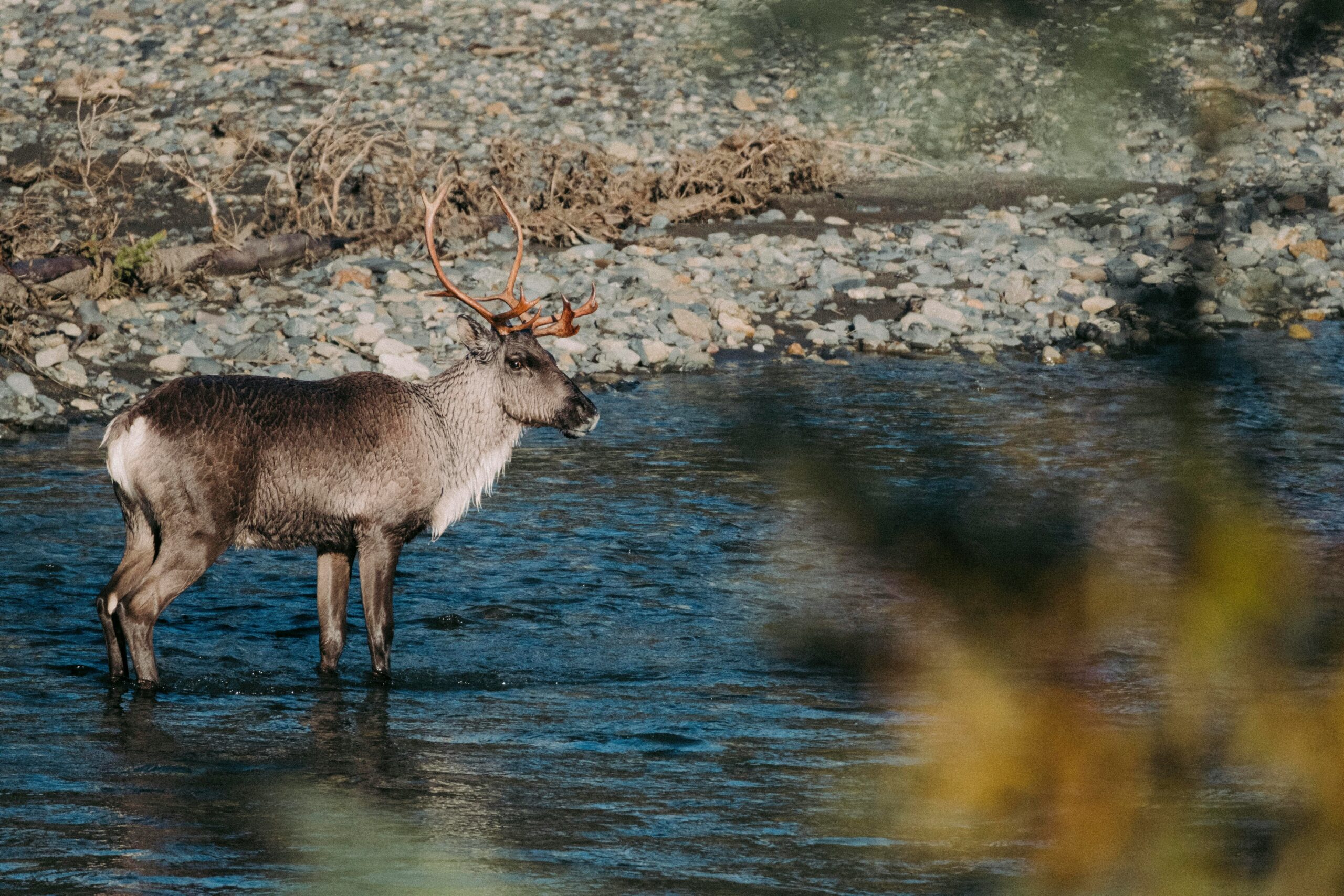
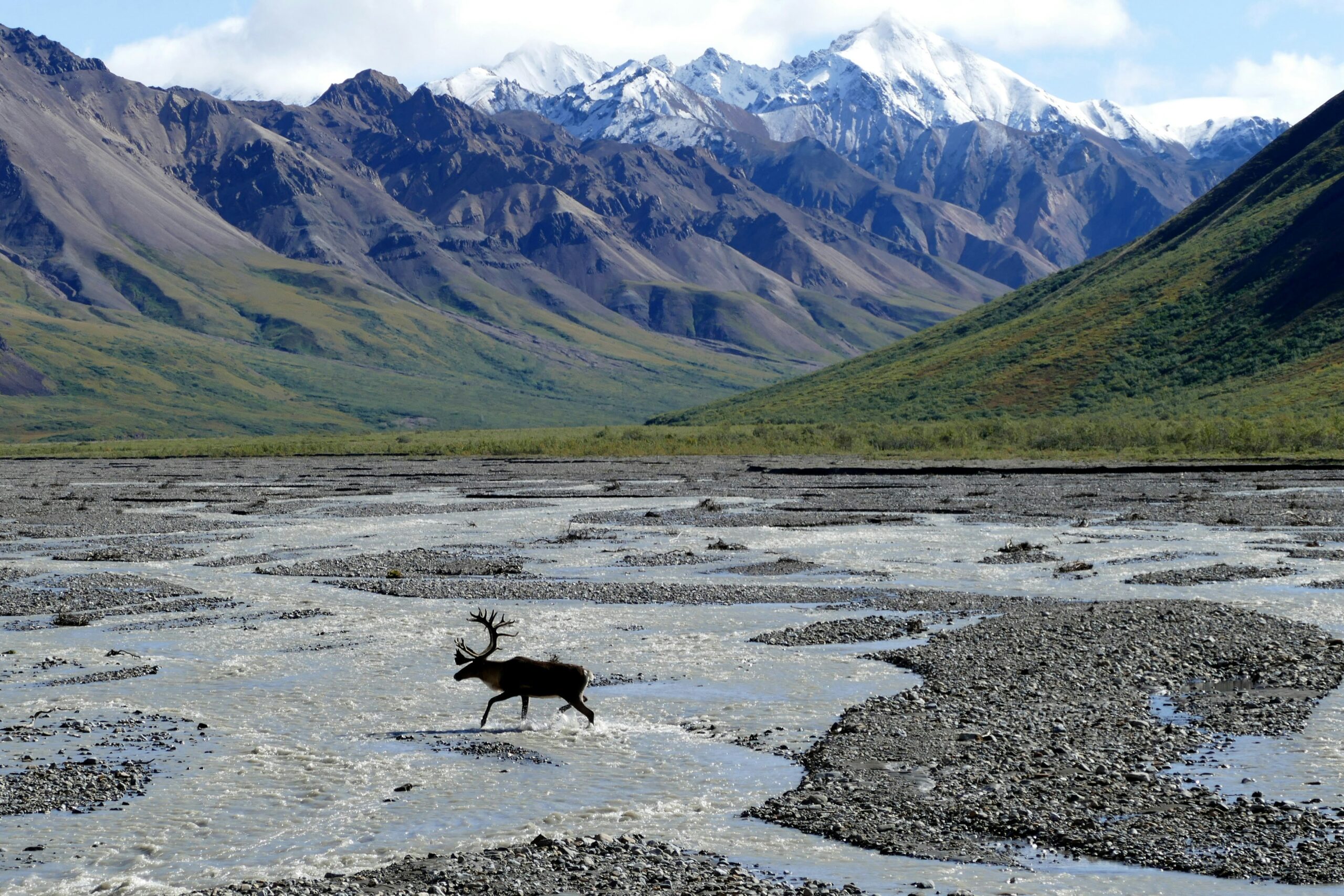
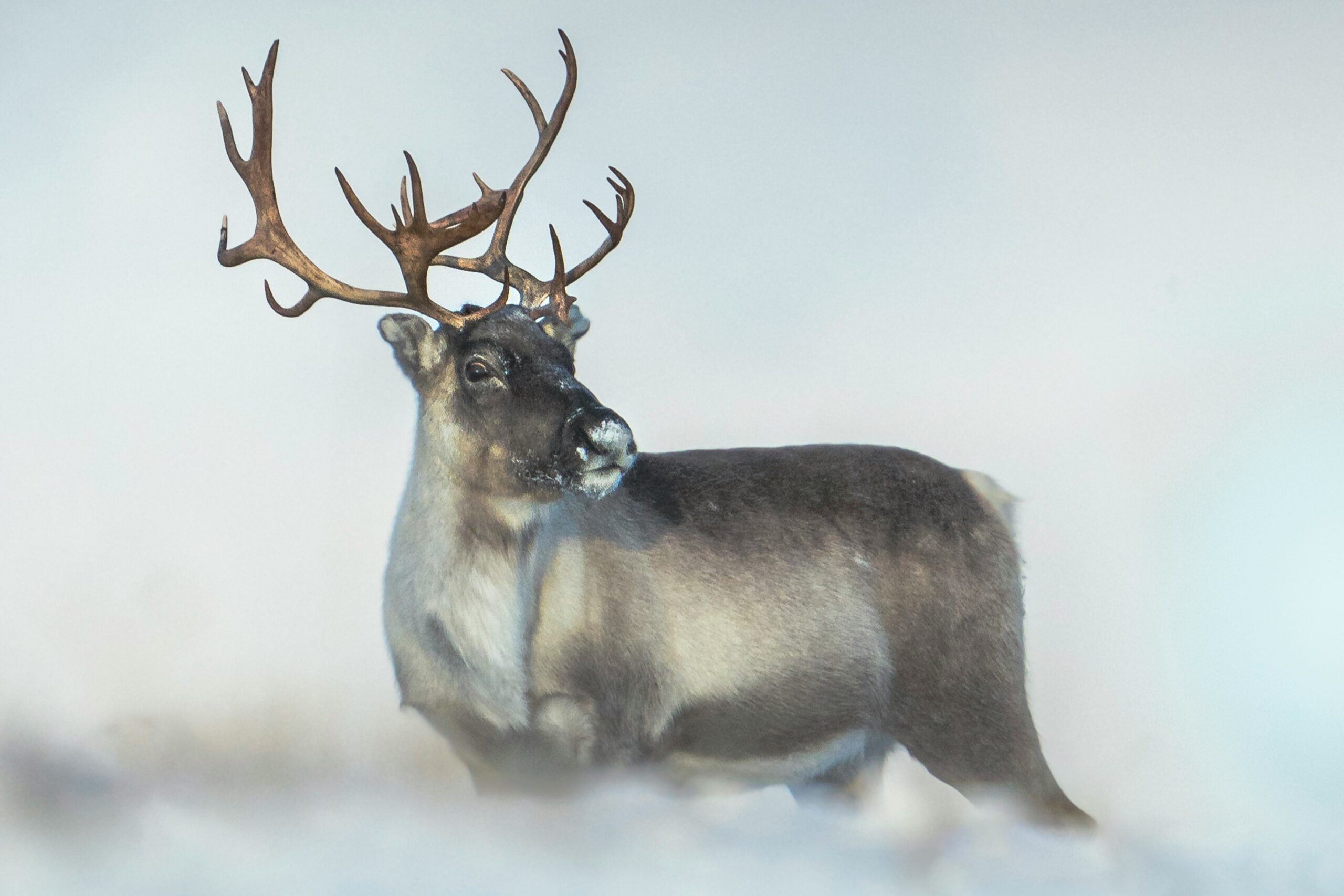
Barren-ground caribou (Rangifer tarandus) are the defining large herbivore of the circumpolar Arctic and Subarctic and have shaped tundra ecosystems for tens of thousands of years. They undertake some of the longest annual migrations of any terrestrial mammal, often more than a thousand kilometres between calving grounds and winter range, and their lichen-dominated winter diet, combined with their role as the principal prey of wolves and grizzly bears, places them at the centre of a tundra food web that links primary producers to apex predators across vast distances. Caribou are also a cornerstone of food sovereignty, economy, and cultural continuity for many northern Indigenous peoples. Despite this ecological and cultural centrality, most North American barren-ground herds have contracted by 50 to 95 percent since their 1980s to 1990s peaks, and the species is now listed as Threatened in Canada.
Why caribou are a good system for our questions
Several features of caribou biology make them a rich system for asking how natural populations respond to ecological and evolutionary change. The species is partitioned into demographically distinct herds spanning a continent’s worth of habitat. These herds act as natural replicates that have travelled different demographic trajectories (deep historical bottlenecks, recent collapses, slow recoveries) while remaining closely related enough for genome-wide comparison. Their reliance on lichen, which takes up pollutants directly from the atmosphere, also turns each herd into a sensitive integrator of the chemical environment it moves through, so herds carry distinct contaminant signatures layered on top of their distinct genomic histories. Together these properties let us pair contemporary, fast-changing molecular signals of environmental stress (gene expression, DNA methylation, tissue chemistry) with the slower-changing genomic signatures of demographic change (effective population size, inbreeding, genetic load), and ask how the two records interact as the Arctic shifts under climate change and contaminant deposition.
Members Involved
Eric Wootton
Graduate Student
Rowan Barrett
Principal Investigator