
Guppies
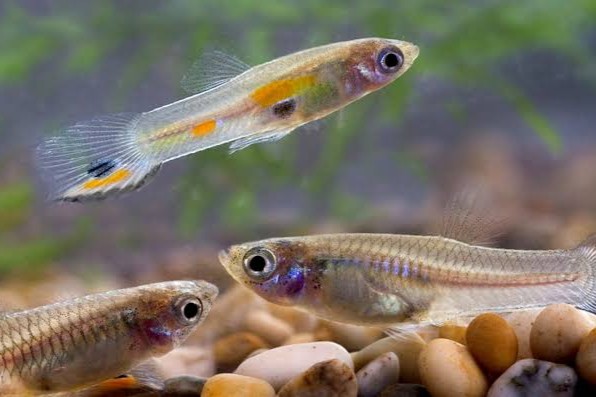
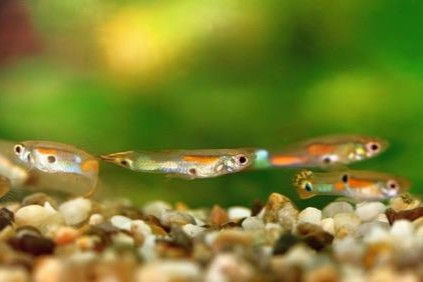
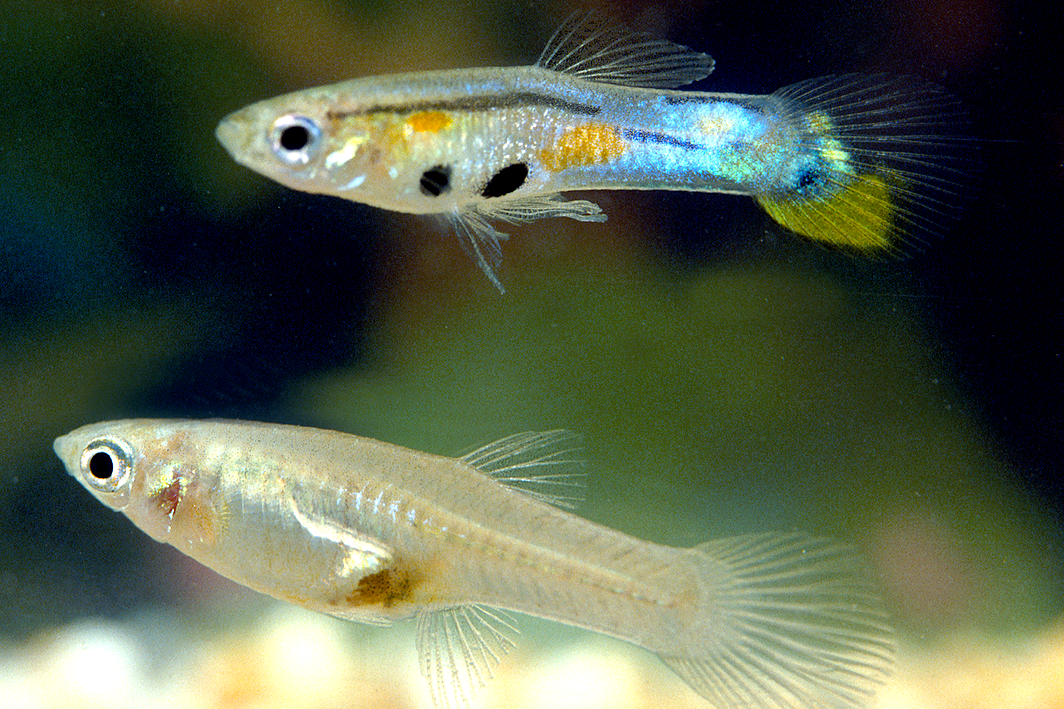
Trinidadian guppies inhabit streams that differ predictably in predation pressure, dissolved oxygen, parasites, food availability, and other ecological conditions. These repeated environmental contrasts, together with the guppy’s short generation time and suitability for controlled experiments, make it possible to compare immediate environmental responses with differences that have evolved among populations.

Why guppies are a good system for our questions
Our research uses guppies to investigate how behaviour, physiology, gene regulation, and DNA methylation respond to environmental stress. Predation cues, for example, can produce rapid changes in neural DNA methylation, while exposure during development can have longer-lasting effects on both behaviour and methylation. Comparisons among populations that have colonized habitats with different oxygen concentrations also allow us to distinguish plastic responses from evolved patterns of gene expression.
These studies address a central question in our research program: when an environment changes, how much of an organism’s response reflects reversible plasticity, developmental experience, inherited epigenetic variation, or genetic evolution? Guppies allow these possibilities to be tested within a well-understood ecological setting and over experimentally manageable timescales.
Members Involved

Tim Gemeinhardt
Graduate Student

Rowan Barrett
Principal Investigator