
Microbes and Microbiomes
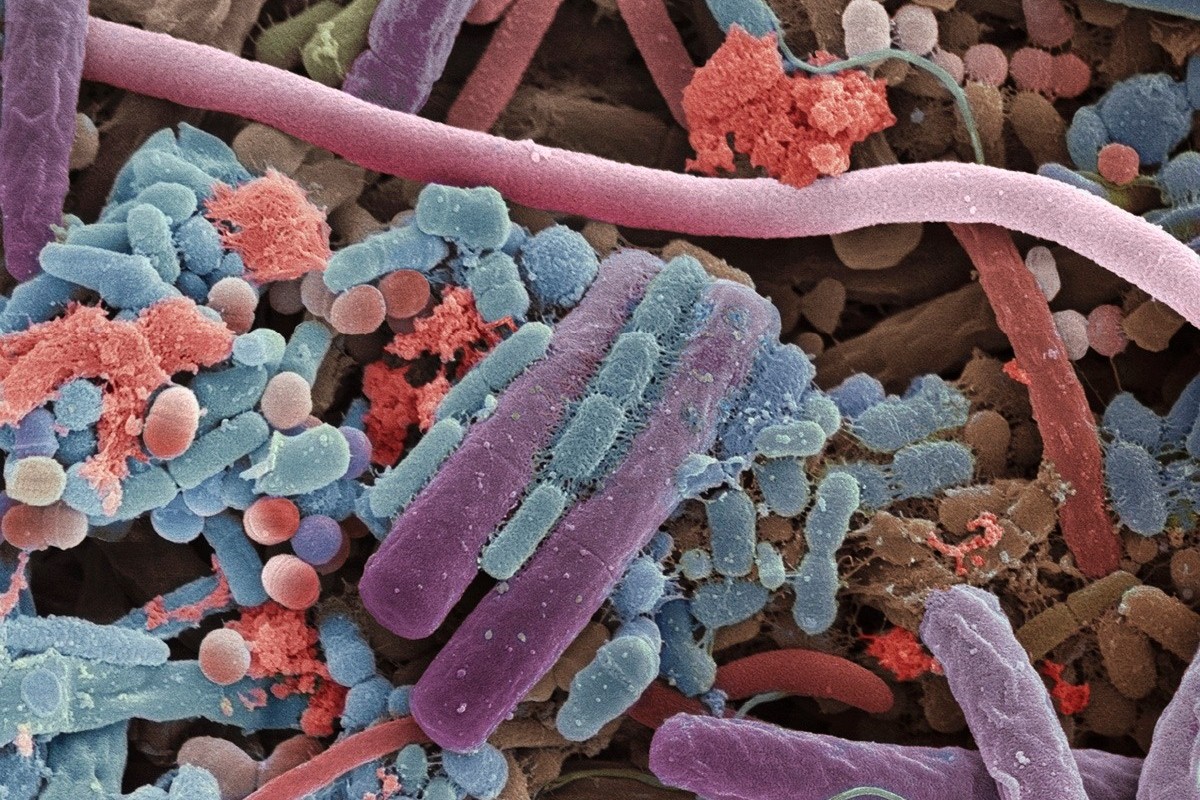
Microorganisms have short generation times, large populations, and enormous functional diversity. Ecological and evolutionary change can therefore be observed over relatively short periods, making microbial communities especially useful for experiments on adaptation, disturbance, and recovery. Experimental evolution with microbes also helped establish the broader questions about predictability and environmental adaptation that continue to guide our research.

Why microbes and microbiomes are a good system for our questions
We study both free-living microbial communities and microbiomes associated with animal hosts. Freshwater mesocosm experiments allow us to test how communities respond to severe environmental disturbances and whether previous exposure increases the likelihood of “community rescue.” Other work follows microbiome assembly after a newly created habitat—such as a skin piercing—becomes available for colonization.
By combining community profiling, environmental DNA or RNA, experiments, and population-genetic data, we can distinguish ecological changes in species composition from evolutionary changes occurring within species. These systems allow us to ask whether biodiversity and ecosystem functions recover together, whether different communities reach similar functional outcomes, and how ecological history influences resilience to future disturbances.


Members Involved
Laura Lardinois
Graduate Student
Paige Smallman
Graduate Student
Akhil Kholwadwala
Graduate Student
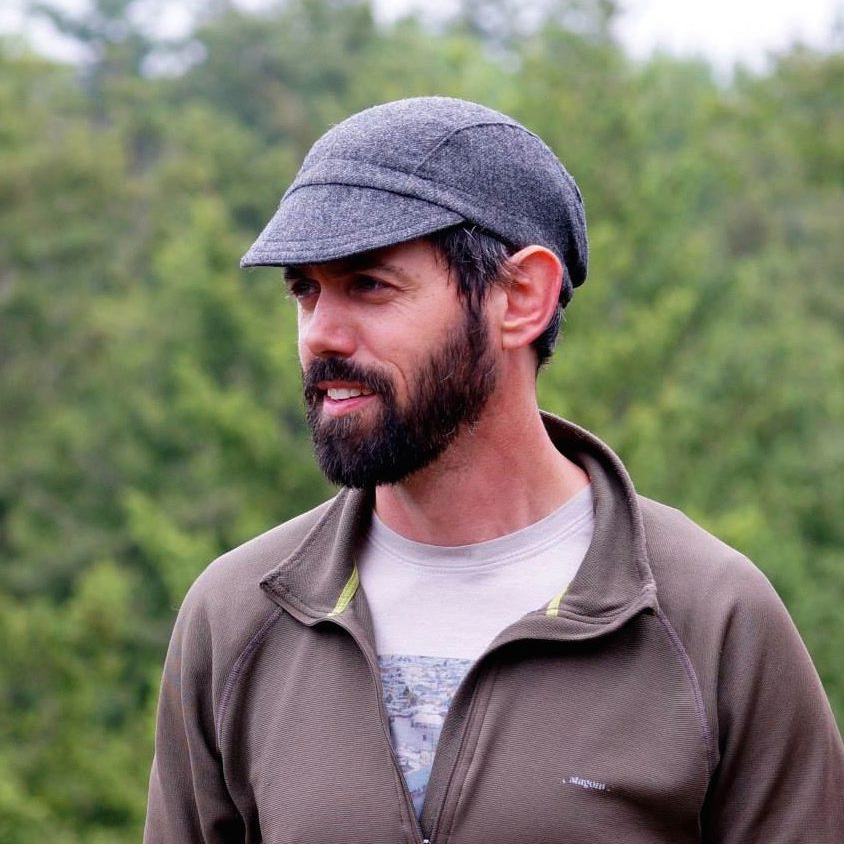
Rowan Barrett
Principal Investigator